
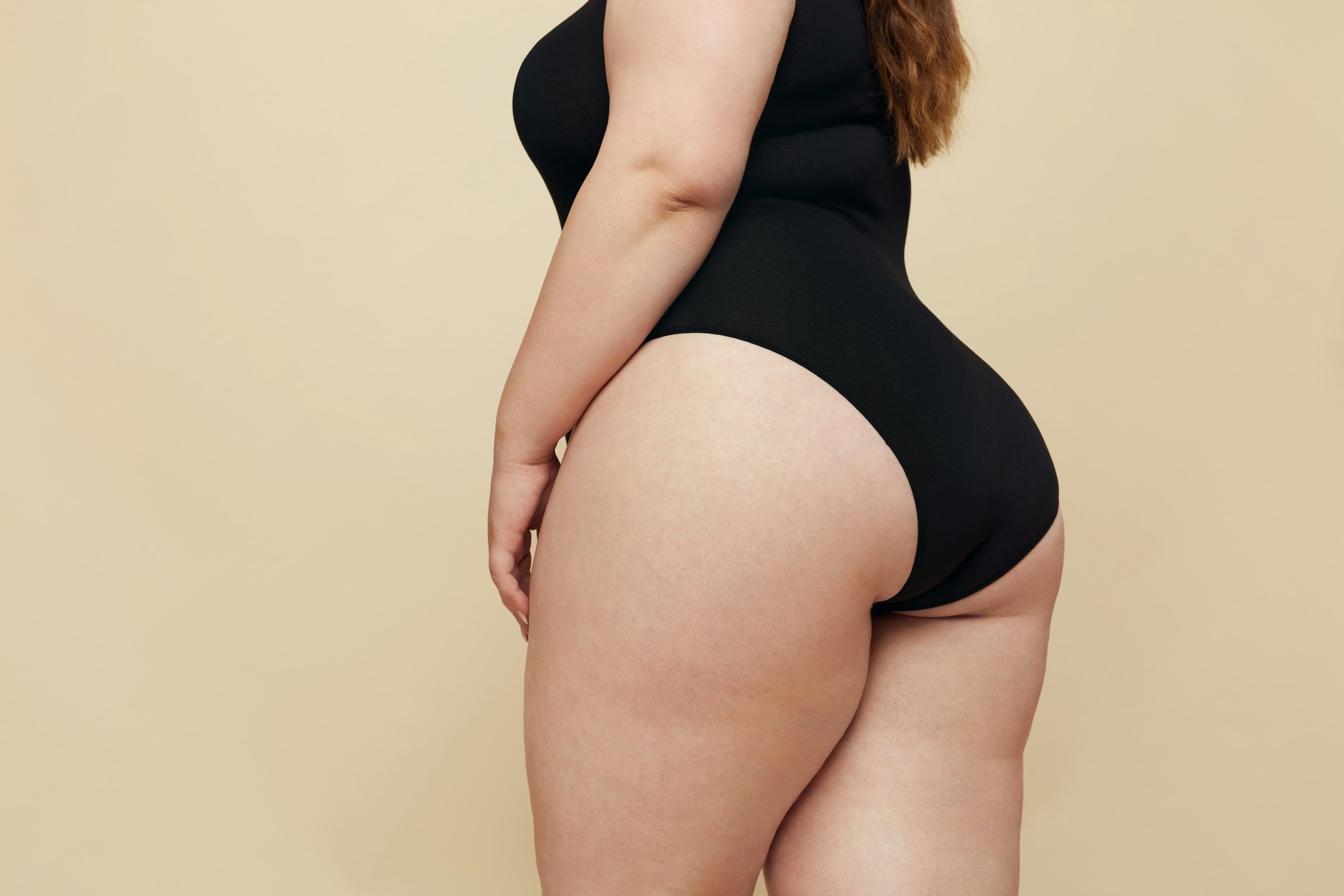
Lipedema Treatment in Berlin
Lipedema is a condition characterized by the pathological, chronic, and symmetrical increase of subcutaneous adipose tissue. We can help you. Learn everything important about lipedema treatment in Berlin here:
QUICK-FACTS
Procedure Duration
depending on fat volume, 1.5-4 hours
Type of Anesthesia
usually under general anesthesia
Clinic Stay
recommended depending on the extent
Before the Procedure
Fasting before surgery day, no blood-thinning medication
After the Procedure
Healing process approx. 4-6 weeks, wear compression garments if necessary
Scars
none to very fine small scars from the incisions
What are other terms for lipedema?
Other terms for the condition include pillar leg, lipohyperplasia dolorosa, adipositas dolorosa, or lipalgia. Most of these terms arose due to the clinical symptoms of tissue proliferation and the accompanying pain.
<iframe width="560" height="315" src="https://www.youtube.com/embed/VOWgnVa_ICQ?si=xbqwC8ODAQZDdGLb" title="YouTube video player" frameborder="0" allow="accelerometer; autoplay; clipboard-write; encrypted-media; gyroscope; picture-in-picture; web-share" referrerpolicy="strict-origin-when-cross-origin" allowfullscreen></iframe>
What is the difference between lymphedema and lipedema?
Lipedema is a congenital fat distribution disorder with initially undisturbed lymphatic drainage. Lymphedema, on the other hand, is either a congenital malformation (primary) or damage (secondary) to the lymphatic system. However, lipedema does not exclude the occurrence of lymphedema.
<iframe width="560" height="315" src="https://www.youtube.com/embed/BxvL2w3GFiA?si=Hh4KLMECukLhb3uT" title="YouTube video player" frameborder="0" allow="accelerometer; autoplay; clipboard-write; encrypted-media; gyroscope; picture-in-picture; web-share" referrerpolicy="strict-origin-when-cross-origin" allowfullscreen></iframe>
How do you recognize lipedema?
Characteristic of lipedema is the symmetrical distribution of fat, primarily on the legs and in most cases also on the arms, sparing the torso, feet, and hands, which leads to a distinctly disproportionate body silhouette. Sufferers complain of pain, edema, and easily caused bruising.
What are the causes of lipedema?
The causes of lipedema are largely unclear. A genetic predisposition and a connection with female sex hormones are suspected for the massive proliferation of fat cells. In contrast to obesity (adiposity), the adipose tissue of those with lipedema does not show an enlargement (hypertrophy) but a significant increase (hyperplasia) of fat cells. Therefore, malnutrition or lack of physical activity are not responsible for the fat deposits.
Adipose tissue is very well supplied with blood, so consequently, more lymphatic fluid is produced (it is, so to speak, the filtrate of the blood that is not reabsorbed by the smallest venous vessels). Damage to the formation of new blood vessels (angiogenesis) and a defect in the capillaries, i.e., the smallest blood vessels (microangiopathy), are suspected. Their permeability is increased in lipedema, inevitably leading to increased fluid and protein leakage into the tissue. This cannot be adequately compensated by the lymphatic system, resulting in edematous swelling despite functioning lymphatic drainage. This is often the reason for the pain and pressure sensitivity experienced by patients. The protein that also leaks from the capillaries causes inflammatory processes in the tissue, leading to hardening and scarring of the lymphatic vessels. Consequently, advanced lipedema can also be the cause of secondary lymphedema. In addition to increased capillary permeability, lipedema patients also experience increased capillary fragility, which manifests as an increased tendency to bruise.
Who is typically affected by lipedema?
Lipedema typically affects only women. In very rare cases, a condition similar to lipedema can also occur in men with pre-existing conditions who suffer from a disturbed hormone balance.
When does lipedema typically occur?
Typically, lipedema occurs in young women, predominantly up to the third decade of life. Cases have been described after pregnancy, but also after menopause (last menstrual period). Therefore, a precise correlation with age or hormone status cannot be drawn.
If lipedema is a disease, who makes the diagnosis?
Since the diagnosis of lipedema is largely clinical, based on the patient's symptoms, any doctor can make it. However, the condition is often not recognized and misinterpreted. If you have similar symptoms, a doctor with a lymphological focus is recommended, as they are aware of possible differential diagnoses and are well-versed in the symptoms of lipedema.
How does lipedema progress, and what are the stages of severity?
The disease is progressive and is divided into four stages: In Stage I, there is a normal skin surface and slightly thickened subcutaneous adipose tissue with smaller nodules. In Stage II, the skin surface is already uneven, and larger nodules are palpable in the underlying adipose tissue. Stage III is characterized by large indentations and bulges, nodules, and fat lobes on the knees and thighs, and in Stage IV, a lymphedema caused by lipedema is present (lipolymphedema).
Do diets or exercise help with lipedema?
Characteristic of lipedema is that diets and exercise are generally futile and do not lead to weight loss.
What therapies are available for lipedema?
For the treatment of lipedema, conservative therapy for lymphedema (complex decongestive therapy, i.e., lymphatic drainage, compression, and decongestive exercises) and liposuction are available.
Is a complete cure possible?
After liposuction, in combination with postoperative complex decongestive therapy, a significant improvement in symptoms can be expected. Unfortunately, a complete cure cannot be assumed.
When is surgical intervention advisable or necessary?
Since the disease is chronic and progressive, surgical intervention in the form of liposuction is highly advisable soon after diagnosis.
What happens before lipedema surgery?
Are there different methods to treat / remove lipedema?
There are various liposuction methods, of which water-jet assisted liposuction (WAL) and tumescent liposuction (TLA) are available for the treatment of lipedema in our practice.
Do symptoms improve with liposuction?
Liposuction can certainly alleviate the symptoms. Pain is often reduced, the tendency to bruise is sometimes lessened, and the formation of edema is minimized. In addition, the body is contoured and proportioned through liposuction.
What do I need to consider before the surgery?
It is important that you do not eat anything for at least six hours before the operation and do not drink anything for at least two hours before (small amounts of water and unsweetened tea are allowed beforehand). You will be unable to work for approximately one to two weeks after the procedure, so it is advisable to take time off from work during this period. To achieve an optimal postoperative result, you should book the upcoming lymphatic drainage and accompanying decongestive therapies before the operation.
How many surgeries are necessary?
In one surgery, we can aspirate up to five liters of fat. Since fluid is infiltrated before aspiration, as described, larger aspiration volumes can lead to fluid overload for the body. If your condition requires more extensive liposuction or fat aspiration, follow-up procedures for further fat reduction can be performed after approximately three months.
How completely can lipedema be removed?
Lipedema can usually only be significantly reduced, and symptoms alleviated. We cannot promise a cure.
What preliminary examinations are necessary?
Before liposuction, a clear diagnosis is obligatory. Lipedema often remains undiagnosed and is confused with lymphedema. If the reverse is true, liposuction is not indicated here in Berlin. You will learn whether and which preliminary examinations are necessary during a detailed consultation in our practice clinic in Berlin.
Which medications should not be taken before surgery?
As before any surgical procedure, you must not take blood-thinning medications (such as ASS). For other medications, please consult with us, your family doctor, or our anesthesiologist.
Which stimulants should be avoided beforehand and for how long?
If possible, you should refrain from smoking or reduce the number of cigarettes two weeks before and four weeks after the surgery, as nicotine negatively affects wound healing and the increased tendency to bruising already present in affected individuals.
How quickly can I get an appointment?
How quickly you get an appointment depends on the availability in our schedule. Feel free to call us at our practice clinic Berlin-Mitte at Gendarmenmarkt to schedule a consultation.
How long should I take leave?
We recommend taking one to two weeks off, as you will likely still have mild pain after the procedure, and the affected areas will be noticeably swollen and bruised.
Which documents are required before the procedure?
You will receive all necessary documents from us. We will request them at the appropriate time. It is advantageous if you bring any doctor's letters regarding diagnosis and, if applicable, therapy to the consultation.
What is the process for lipedema removal?
What are the steps for removing lipedema?
The removal of lipedema is similar to conventional liposuction and can be performed using the established methods (WAL and TLA). Before the actual aspiration, a solution (tumescent solution), consisting mostly of saline solution, is injected through small stab incisions. It also contains the hormone adrenaline to minimize bleeding and the local anesthetic lidocaine. After a certain waiting period, liposuction is performed with blunt cannulas to reduce damage to sensitive structures. Once enough fat has been removed from the respective areas, we proceed to the next region. We determine if enough fat has been removed by how the skin envelope feels after liposuction. This requires some experience to avoid "over-suctioning" certain areas and causing undesirable indentations and contour irregularities.
Should areas with symptomatic lipedema remain after the first liposuction in Berlin, we can plan the next liposuction after 3 months. Please always plan for accompanying lymphatic drainage or decongestive therapies to achieve the best final surgical result.
How long does the procedure take?
The duration of the procedure depends on the amount of fat to be aspirated. One of our doctors will assess this with you during the consultation and will then be able to inform you of an approximate surgery time.
Is a clinic stay necessary?
This depends on the extent of the findings. Lipedema usually involves large aspiration volumes, so a stay in our facility in Berlin is recommended. You will be cared for around the clock by qualified nursing staff.
Who performs the operation?
The operation is performed by Dr. Volker Rippmann or Mr. Christian Roessing. Both are highly experienced specialists in Plastic and Aesthetic Surgery and have been skilled liposuction surgeons for many years. They are often assisted by their long-standing assistant, Dr. Sophia Deter.
Which type of anesthesia is recommended?
For extensive liposuction procedures, we always recommend general anesthesia. For smaller corrective procedures, local anesthesia may be sufficient. We will gladly inform you which type of anesthesia would be optimal for you during the consultation.
What happens after lipedema surgery?
When is the result of the procedure visible?
The final result is visible approximately four to six months after the last procedure. However, you can already see initial tendencies after about six to eight weeks.
Do I need to wear compression bandages or similar after the surgery, and for how long?
After the operation, you must wear a compression garment in the respective areas. This will be put on in the operating room and will reduce swelling over the next four to six weeks.
Which medications are used?
In addition to saline solution, the tumescent solution contains the hormone adrenaline to minimize bleeding, the local anesthetic lidocaine, and the buffering substance sodium bicarbonate. Furthermore, the anesthesiologist will administer appropriate anesthetic medications, pain medications, and an antibiotic.
What should be considered after surgery?
After the operation, compression garments must be worn around the clock. Fluid may still drain from the incision sites during the first two days, but this is normal and should not alarm you. The legs, in particular, tend to swell postoperatively. In cases of very severe swelling and discoloration, we ask you to contact us promptly. For emergencies, you will receive a phone number from us where we can be reached at any time.
How long will bruising and/or swelling be visible?
Bruising typically subsides after about two weeks, but the aspirated area can remain swollen for up to six months postoperatively.
How can I best support the healing process?
Gentle lymphatic drainage can reduce swelling. The affected areas (i.e., legs and arms in lipedema) are stroked towards the center of the body.
Is bed rest required?
Physical rest cannot hurt in the first few days. To mobilize swelling and reduce the risk of thrombosis, timely light physical activity is recommended. Bed rest is not required.
Which activities should I avoid after the surgery?
After the surgery, you should refrain from any sports activities or strenuous physical exertion, as these negatively affect swelling. You can shower at any time, but only bathe after the stitches have been removed. Please wear the compression garment for as long as possible and only take it off for showering/bathing or to wash it.
When can I resume sports?
Sports activities are allowed again after removing the garment, i.e., after four to six weeks.
When can I return to work?
Whether and when you can return to work depends on your job. We recommend taking one to two weeks off; however, for physically demanding work, a longer break is advisable.
Are there specific cosmetics/creams that should not be used after surgery?
You can continue to use your daily skincare products after the operation. Feel free to ask during your consultation if you are unsure about your cosmetics.
Which skincare creams are recommended after the treatment?
For scar care, after suture removal, we recommend nourishing ointments or oils (e.g., Bepanthen). Once the scabs have fallen off, the scars can be treated with silicone gel, which you can massage into the scars to help them fade as quickly as possible.
Can lipedema return after surgery?
Liposuction leads to a permanent reduction of symptoms. However, due to the progressive nature of the disease, the characteristic symptoms can reappear. Therefore, it is advisable to seek ongoing specialist medical treatment.
To what extent are corrections possible after surgery?
After the operation or follow-up procedures, corrections are possible at any time. However, our doctors always strive to ensure that these are not necessary in the first place.
What does liposuction cost for different problem areas in lipedema treatment?
The costs for liposuction for lipedema are very similar to those of conventional liposuction. One region (e.g., inner thighs) is priced specifically; for additional regions, these costs accumulate depending on the extent. Added to this are the costs for anesthesia, compression garments, and possibly an overnight stay. The exact costs will be calculated with you during the consultation.
Are there financing models like installment payments?
It is possible to inquire about financing models with us.
Do health insurance companies cover the procedure?
For purely aesthetic reasons, health insurance companies will not cover the procedure. However, since you usually have a pathological finding (lipedema diagnosis), it is possible that health insurance companies will cover the costs of the treatment. For this, it is usually necessary to write a detailed medical report to inform the health insurance companies of your suffering. We will gladly explain the exact circumstances to you during the consultation.
Will scars remain after the procedure / lipedema treatment?
After the procedure, small dot- or line-shaped scars will remain, the size and location of which you will be informed about during your consultation or preliminary discussion. However, these are usually in inconspicuous areas, so they will be barely visible later.
What are the general risks of lipedema treatment?
As already mentioned, bruising and swelling of the affected regions cannot be avoided during liposuction. However, you counteract swelling by consistently wearing the compression garment. Generally, the final result cannot be assessed immediately after the operation, and thus any remaining asymmetries can only be evaluated after approximately six months. In rare cases, a small correction may then be necessary.
What can cause complications?
Although serious complications during liposuction have been described in the literature, they are mostly due to the surgeon's lack of experience and improper execution of the procedure. Mr. Roessing and Dr. Rippmann are very experienced in the field of aesthetic surgery, so you do not need to worry about this. You will be thoroughly informed about all possible complications of liposuction / fat aspiration in Berlin during your consultation.
How high is the risk of infection?
Liposuction is a surgical procedure and is therefore performed under sterile conditions, which significantly reduces the risk of infection. During the procedure, you will also receive an antibiotic, which will be prescribed to you in tablet form for at least five days postoperatively.
Can nerves or muscles be damaged?
Despite the blunt cannulas used during liposuction and careful technique, damage to the smallest cutaneous nerves can occur. This manifests as a sensation of discomfort or numbness in the affected area but usually resolves within six months. After the operation, you will likely experience muscle-soreness-like pain, resulting from irritation of the fascia surrounding the muscle. However, muscle damage does not occur.
What permanent damage is possible?
Permanent damage such as lasting numbness, indentations, or retractions rarely occur. We try to avoid these through gentle aspiration.
How high is the risk of needing a correction?
Should asymmetries arise after the last procedure due to remaining fat deposits or indentations, a correction will be necessary. We usually perform these after a significant reduction in swelling and, depending on the extent, under local anesthesia and on an outpatient basis.
How high is the risk of indentations and of too much fat being aspirated?
Due to the many years of experience of our doctors, the risk of "over-aspiration" is low. Generally, for slender patients and patients with connective tissue weakness, the risk of indentation formation and retractions is increased. However, in lipedema, the subcutaneous adipose tissue is significantly thickened, so the likelihood of too much fat being removed is low.
Is there a risk that too little fat will be aspirated?
Aspiration of more than five liters of fat is usually not recommended due to possible complications. Lipedema patients often have more extensive findings, so it usually does not remain a single procedure. Should asymmetries due to fat deposits still exist after the last procedure, these can, of course, still be removed.
Can I legally protect myself against botched procedures?
You can submit an insurance application for any potential follow-up costs to an insurance institution no later than one day before the operation, thereby obtaining insurance coverage for one to two years. We will gladly provide you with the relevant documents during the consultation.